Winter Road Maintenance with Advanced De-icing Technologies
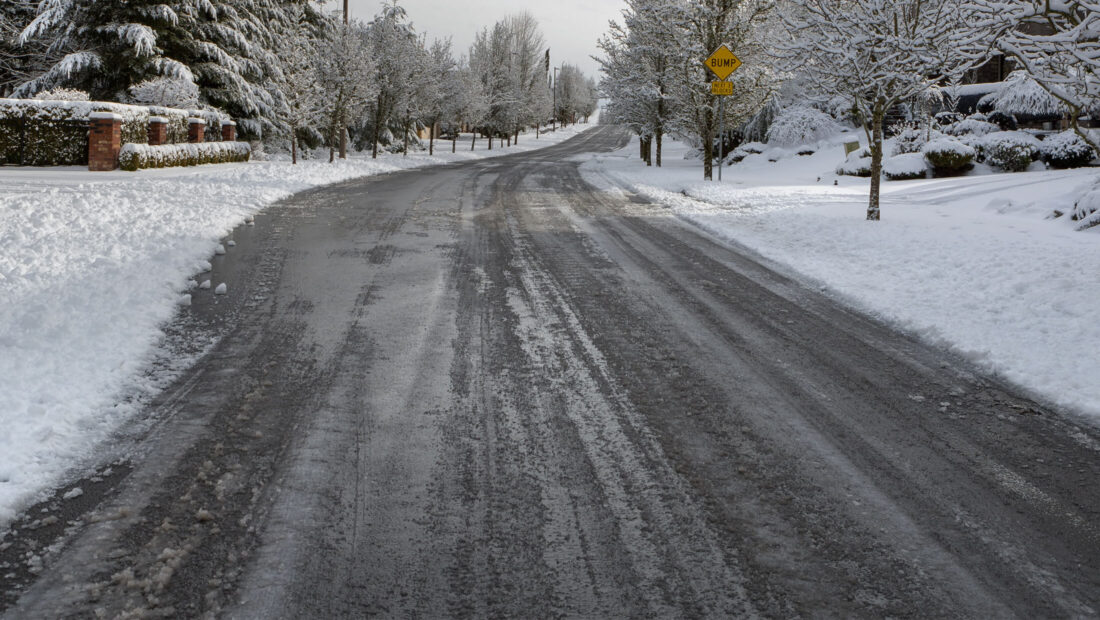
De-icing of roadways is a critical task for ensuring safety and accessibility during winter months. However, traditional methods, primarily the use of salt and chemicals, have long been known to pose significant challenges to the integrity of asphalt surfaces. In this article, we explore innovative de-icing technologies and materials that promise to be less harmful to asphalt surfaces.
Traditionally, road de-icing has heavily relied on salt-based products, such as sodium chloride, calcium chloride, and magnesium chloride. While effective in lowering the freezing point of water and thus melting ice, these compounds have considerable downsides. They can cause corrosion and deterioration of asphalt pavements, leading to increased maintenance costs and reduced pavement lifespan. Moreover, they pose environmental hazards, contaminating nearby soil and water bodies.
As the asphalt industry continues to seek solutions for the perennial challenge of winter road maintenance, a wave of innovative de-icing technologies is emerging. These novel approaches are not only enhancing road safety during icy conditions but are also offering environmentally friendly alternatives to traditional methods.
From self-de-icing asphalt additives to cutting-edge materials that repel ice, the advancements in this field are poised to transform how we manage and maintain roads in winter. Let's delve into some of these groundbreaking innovations that stand out for their effectiveness and potential to change the game in winter road maintenance.
Recent advancements have led to the development of self-de-icing asphalt mixtures, which incorporate additives that prevent ice formation. One notable example is an additive developed by Iterchimica, which aims to minimize icing on asphalt surfaces in winter conditions. These additives are mixed into the asphalt during production, and they work by lowering the freezing point of water or by generating heat to prevent ice formation.
Another promising area is the use of anti-icing emulsified asphalt binders (AEABs). These binders are designed to coat the asphalt and prevent the adherence of ice to the pavement surface. Laboratory tests have shown that AEABs not only exhibit excellent anti-icing properties but also maintain the desired pavement performance.
The development of super-hydrophobic asphalt concrete focuses on creating a water-repellent surface that prevents ice formation. The effectiveness of this technology lies in its ability to repel water, thus significantly reducing the likelihood of ice build-up. This approach not only enhances the de-icing performance but also contributes to pavement durability.
Microwave heating has emerged as a novel method for de-icing asphalt pavements. This technique involves using microwave energy to heat the asphalt pavement through the ice layer, weakening the bond between the ice and the asphalt surface. This method is effective, and efficient, and offers the added advantage of being environmentally friendly.
The focus on developing ice-resistant materials has led to the creation of coatings and additives that enhance the deicing efficiency on asphalt pavements. These materials exhibit strong hydrophobic properties, making it difficult for ice to adhere to the pavement surface, thereby easing the process of mechanical removal of ice.
The new de-icing technologies offer several benefits over traditional salt and chemical-based methods:
While these innovations are promising, there are challenges to their widespread adoption:
The advancement in de-icing technologies presents a significant opportunity for the asphalt industry to address the challenges posed by winter conditions more effectively and sustainably. As these technologies evolve and become more accessible, they have the potential to revolutionize winter road maintenance, offering safer, more durable, and environmentally friendly solutions.
POSTED: December 28, 2023
TAGS: Asphalt Paving